Sunday, November 28, 2010

CA Republicans Look To Shut Down House Ethics Office

Our California Republican delegation in the House of Representatives (combined net worth of $672,185,877) is wasting no time at all getting down to work.

One of their first priorities? Shutting down the House Ethics Office.

Despite publicly promising more transparency and disclosure of the inner workings of Congress, behind closed doors, the GOP leadership has made moves indicating the Office of Congressional Ethics (OCE) may be targeted for cuts or extinction.
According to an email seen by ABC News, Rep. David Dreier (CA-26), (net worth $17,715,000) called the OCE on Friday, Nov. 5, just three days after the midterm elections in which Republicans regained a majority and control of the House. During that phone conversation, ABC's source said, the California representative asked for justification of its continued existence.
A memo outlining why the bipartisan group is a service to Congress was then sent to one of Dreier's representatives late Sunday evening, Nov. 7 – right before the 22-member (GOP) transition team convened to begin crafting rules for the operation of the GOP-led House, sources close to congressional leadership told ABC News.
At this point, it might be helpful to point out that another member of the GOP transition team, and one of Dreier's fellow CA-GOP Congressmen, John Campbell (CA-48) (net worth $37,282,000),  is currently under investigation by the very office they're trying to shut down.

The ethics investigation of a Republican congressman from Irvine has been referred to the House Committee on Standards of Official Conduct. The issue is a pair of campaign fundraisers before a key vote on financial reform.
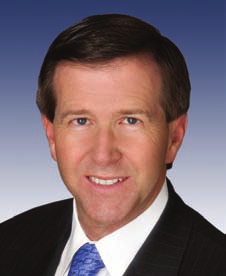
Republican Congressman John Campbell publicly denounced the financial reform bill every step of the way. So his “no” vote on the measure, both in the House Financial Services Committee and on the House floor, was no surprise.
But in the days between those votes, Campbell held two fundraisers – and they could pose an ethics problem for the Orange County congressman. House ethics rules advise lawmakers to avoid “even the appearance” that political fundraising is linked to votes.
The independent House Office of Congressional Ethics has recommended that the House-run Committee on Standards of Official Conduct investigate whether the Campbell fundraisers violated ethics rules. In a statement, the three-term congressman said he’s “perplexed” because “no evidence” of wrongdoing has been presented. Campbell said he’s looking forward “to a favorable resolution of this matter.”

A quick Google search reveals that quite a number of the CA-GOP delegation have had their own run-ins with the Office of Congressional Ethics or other law enforcement authorities that could bring them to the attention of the OCE.


Jerry Lewis (CA-41) (net worth $1,550,000)- under investigation for his use of the “earmarking” process to benefit a lobbyist and friend, Bill Lowery. Of interest to the investigation is the revolving door between Lewis’ office and Lowery’s – two Lewis staffers have gone to work for Lowery as lobbyists, with one of them coming back to Lewis’ office – and Lewis' earmarking of projects for firms that Lowery represents, which has included the Brent Wilkes-owned ADCS. Federal investigators are also looking into a land deal which protected nearly 41 acres in Lewis’ neighborhood from developers. The land was given to the city of Redlands by Jack and Laura Dangermond. The couple, who founded and operate Environmental Systems Research, Inc., have received tens of millions of dollars in government contracts from the House Appropriations Committee that Lewis chaired through the 109th Congress.


Ken Calvert (CA-44) (net worth $9,799,995) has been on the radar of Congressional watchdogs for quite some time. In just one example, he came to the attention of authorities in 2006 for a shady land deal. A water and sewer district in northwestern Riverside County apparently circumvented state law when it sold 4 acres of public land to Inland Rep. Ken Calvert and his investment partners for $1.2 million in 2006. The Jurupa Area Recreation and Park District had hoped to purchase the land, but it was sold to Rep. Ken Calvert and other investors without first offering the land to other public agencies, a requirement of state law intended to provide more recreational land.

The deal allowed Calvert, R-Corona, and his partners to buy public land without competition in a booming sellers' market. 

Calvert co-sponsored legislation that would increase the water supply of the Jurupa Community Services District and other water agencies by providing money for desalination facilities. District general manager Carole McGreevy, who oversaw the land deal, is also secretary of a joint-powers authority that owns and operates desalination plants in the Chino Basin. Calvert said in a telephone interview that the legislation benefits the region, not just the Jurupa district.

Under ethics rules, Calvert has no conflicts of interest as long as he paid market value for the land, according to political ethics experts. But some observers said the deal raises questions.


Gary Miller (CA-42)  (net worth $84,302,000) came to the OCE's attention in 2006 for allegedly violating House ethics rules when he took out nearly $7.5 million in promissory notes in 2004 from a campaign contributor and business partner, Lewis Operating Corp., which he used to purchase real estate from the company. Lewis Operating Corp., a real-estate development company based in Southern California, is one of Miller’s top campaign contributors; employees of the company have donated $19,300 to Miller’s campaign committee since his election in 1998.
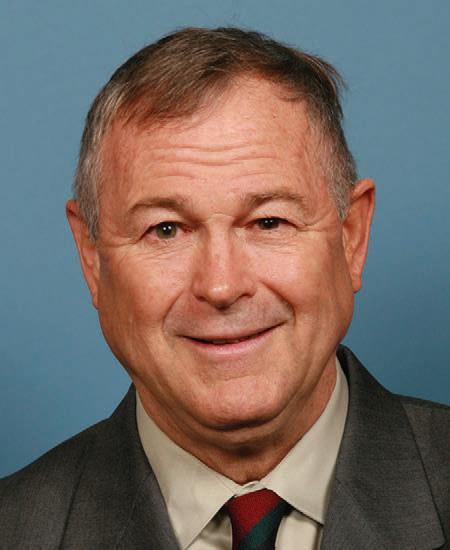


Dana Rohrabacher (CA-46), (net worth $734,998) though not a target of an OCE investigation, is somewhat "troubled" about how his good friends Jack Abramoff and Tom Delay have been treated by the authorities. According to the LA Times, Rohrabacher accepted $7,500 from Abramoff or the Indian tribes he represented. As for Delay, he had this to offer in 2009:
"What was done to Tom DeLay and other Republicans in the past was unconscionable. Accusations against them in the form of questionable indictments were used as an excuse to destroy everything they had worked for politically by making them step down from their positions before being convicted of anything. DeLay's treatment was completely unfair and cost him his political career, yet he was never convicted."
Delay was convicted on November 24 of money laundering and conspiracy to commit money laundering.

It's not a shock that these California Republicans would want to see the OCE disappear, just as it wouldn't be a shock to find out a robber would want the local police station shut down. But if successful, they'll send a hell of a message to voters who swept them into office on a wave of tea-bag fueled rage. They'll change the way Washington does business alright, but not in any way those voters might have imagined or intended.

Friday, November 26, 2010

Young Mother Forced To Miss Flight After Refusing To Have Her Breast Milk Irradiated


The incident happened back in February, but is relevant to the current discussion because it points up yet again  how arbitrary TSA rules are and how capriciously they are followed.

Stacey Armato did everything right. She did not want her breast milk irradiated or x-rayed, so she packed it in TSA approved containers and separated them for inspection. She printed out the TSA rules (which clearly states that breast milk can be considered "medical liquids" and not subjected to x-rays or irradiation) to help answer any questions.

None of it helped. The TSA agents, who had dealt with Stacey the week before on her incoming flight, were waiting for her. And they wanted to teach her a lesson.

I almost never had a problem…until the week before this screening. I was held for 30 minutes that week while the TSA manager called to find out the rules. I was told to “pump and dump,” and asked why the milk wasn’t clear, also asked where my baby was and if it was really milk (uh traveling, working mom pumping doesn’t usually have the baby with her).
After begging him to figure it out, they finally let me through. I called and complained to TSA and was instructed to travel with the TSA breast milk rules printed out and present them whenever there is a problem.
As my items come through security this time, I notice immediately that I was dealing with the same people from the week before. The woman tells me right away that my milk might have to go through the x-ray, and then I tell her I printed the rules. I go to grab the rules on top of my bag and she freaks out and pushes my arm away. Another guy comes over and calls for “back up” and they put in me back in the glass cage. Standing 50 ft away are the same manager and supervisor I had dealt with the previous week.

They will stall for 20 minutes before coming over to me.

Meanwhile, one of the guys comes over to me and tells me “to be quiet if I know what’s good for me.” At the end of this portion I have been locked up for just under 10 minutes. The whole ordeal takes just under 1 hour.

Stacey only had 40 minutes to catch her flight. After being made to wait in a glass cage for about 10 minutes, she starts to become upset.

My patience wears thin and I start crying. It is hard to see on this video, but real tears wouldn’t stop streaming down my face. About 10 minutes into all this, a Phoenix PD comes to calm me down. I explain to him that there is no reason I should be treated this way and I have every right to be upset.
He then says “they” (aka TSA) saw me coming, have it out for me (from my complaint against TSA the week before when they didn’t know the breast milk rules then either), and I should travel out of a different gate in future weeks.
He said TSA wants me to play along with their horse and pony show and if I don’t then TSA can have the Phoenix PD arrest me! Well, I wanted to get home to my baby and my flight was 30 minutes from departure so I ‘played along.’ Three Phoenix PD watched in the background…I could tell they all knew this was a waste of their time but I was happy to have them standing by in case TSA continued to act out of line.

In the end, Stacey missed her flight. You can read more about the incident here.

Remember, it's all about making you feel safe, not about actually keeping you safe.

Thursday, November 25, 2010

Happy Thanksgiving!


Look how far Sarah Palin’s come. 

It was only two year ago that the former Vice Presidential candidate — and then Alaskan Governor — was giving her first post-election interview just a few feet from turkeys getting slaughtered – a PR nightmare that some though showed her naivete. Cut to two year later, Ms. Palin is the star of her own hit reality show, a best-selling author, a legitimate 2012 presidential candidate and a political force that the has put the established political class back on their heels.

And speaking of turkeys, another oldy, but goody.


WKRP Turkey Drop from Mitch Cohen on Vimeo.

Wednesday, November 24, 2010

Make Every Day "Opt Out" Day: What You Need To Know To Preserve Your Health And Privacy


Protecting your health and your 4th Amendment rights isn't just for special occasions. If you want to preserve both every time you fly, What You Need to Know About Your Rights at the Airportby the Identity Project, has some important information not found elsewhere, including your rights to get a refund if you're not allowed to fly.


  1. TSA “screeners” are not law enforcement officers. Despite wearing police-type uniforms and calling themselves “officers”, they have no police powers and no immunity from any state or local laws.  At some airports, notably San Francisco (SFO) and Kansas City (MCI), they aren’t government employees at all, but rent-a-cops employed by a private contractor. They cannot legally arrest or detain you (except as a citizen’s arrest, the same way you can arrest them if they commit assault or battery). All they can do is call the local police.
  2. You have the right to remain silent, including when questioned by TSA “Behavior Detection Officers.” Anything you say may be used against you.
  3. You have the 1st Amendment right to film, photograph, and record what happens in public areas of airports, including your interactions with TSA and screeners.  Photography and recording in airports and at TSA checkpoints violates no Federal law or TSA regulation. Any state or local laws that purport to prohibit this are likely to be unconstitutional. You have the right, for your own protection, to document what happens to you and what is done to you.
  4. You have the right not to be assaulted or battered (sexually or otherwise), falsely arrested, unlawfully detained, or kidnapped.  You should consult the applicable laws, including local laws, and/or an attorney if you plan to do any of these things, but you have the right to make a criminal complaint and/or a citizen’s arrest of someone who assaults you, and/or to sue them for damages.
  5. Under most airlines’ conditions of carriage, you have the right to a full and unconditional refund if the airline refuses to transport you because you won’t show ID or won’t “consent” to whatever they want to do to you in the name of “screening”. Read this first: Here’s what to do to protect your right to a refund.  If the airline refuses to give you a full refund, you can sue them for damages and request that the US Department of Transportation investigate and fine them.
  6. If an airline cancels your reservation or refuses to transport you, you may be entitled to collect damages, and you can request that the US Department of Transportation (and, if you were denied passage to the USA from another country, that country’s authorities) investigate and fine or impose other sanctions on the airline.
  7. You have the right to freedom of movement, guaranteed by the First Amendment (”the right of the people… peaceably to assemble”) and Article 12 of the International Covenant on Civil and Political Rights, a human rights treaty to which the US is a party: “Everyone lawfully within the territory of a State shall, within that territory, have the right to liberty of movement and freedom to choose his residence. Everyone shall be free to leave any country, including his own…. No one shall be arbitrarily deprived of the right to enter his own country.” Federal law Federal law (49 USC § 40101, part of the Airline Deregulation Act of 1978) requires the TSA to consider “the public right of freedom of transit” by air when it issues regulations.


MORE RESOURCES:


The ACLU provides a handy, downloadable file detailing your rights that you can print out and take with you to the airport. 


If you believe you've been treated unfairly at a TSA checkpoint, you have every right to complain. The EFF has helpful information on how contact and file a complaint against the TSA.


Understand the potential health risks of the new full-body scanners. Download this letter of concern by UCSF scientists detailing potential health risks and take it with you to the airport. Share it with your fellow travelers. 


Lastly, please treat TSA employees with respect and courtesy. Unlike other government employees, TSA agents don't have collective bargaining rights yet, which means they don't have much leverage to change the system. Plus - I know this may come as a shock - most screeners don't actually enjoy touching your junk.
Being a TSO means often being verbally abused, you let the comments roll off and check the next person, however when a woman refuses the scanner then comes to me and tells me that she feels like I am molesting her, that is beyond verbal abuse.  I asked the woman if she thought I like touching other women all day and she told me that I probably did or I wouldn’t be with the TSA. I just want to tell these people that I feel disgusted feeling other peoples private parts, but I cannot because I am a professional.”
So please, don't take out your frustrations on the low guy/gal on the totem pole.  If you need to complain, ask to talk with a manager.

Happy Holdidays and Safe Travels.


Related Stories:


Monday, November 22, 2010

Does TSA Use Molesting Threat To Coerce Travellers Through Irradiating Body Scanners?


Chris Calabrese of the ACLU seems to think so:

TSA has "always done pat-downs," but until recently they haven't been so aggressive, says Chris Calabrese, legislative counsel at the ACLU in Washington, D.C. "The pat-downs never used to go up a woman's skirt."

"It's become troubling," Calabrese says. "You've got these controversial naked strip search machines that they're rolling out at airports across America. And if you choose not to go through the naked strip search machine, you're subject to this (level of intrusive physical contact). It seems punitive. It seems designed to drive you to the naked strip search machine."

Having been the subject of the TSA's new "enhanced" pat-downs myself (after refusing to go through a full-body scanner), where an agent reached so far down the front of my pants her hands brushed up against my pubic hair, I can't argue with this characterization.

But if my choice is between being molested or subjected to having my chromosomes rearranged by a poorly trained non-union worker operating an unproven piece of irradiating machinery, I'll pick molestation.

Every. Single. Time.

Sunday, November 21, 2010

Hillary Clinton: I Would Not Submit To TSA Pat-Down, 'Who Would?'


Hillary Clinton gets it.

WASHINGTON — Would Secretary of State Hillary Rodham Clinton like to submit to one of those security pat-downs at airports?

"Not if I could avoid it. No. I mean who would?" she told CBS' "Face the Nation" in an interview broadcast Sunday.

Echoing comments from President Barack Obama, she said administration officials should try to make the new airport security measures, including full body scans and intimate pat-downs, less intrusive.

"I think everyone, including our security experts, are looking for ways to diminish the impact on the traveling public," she told NBC's "Meet the Press."

"I mean obviously the vast, vast majority of people getting on these planes are law abiding citizens who are just trying to get from one place to another. But let's not kid ourselves. The terrorists are adaptable," she added.

"Striking the right balance is what this is about. And I am absolutely confident that our security experts are gonna keep trying to get it better and less intrusive and more precise."

For example, she said it might be possible to consider ways to limit the number of people who go through surveillance.

"Everybody is trying to do the right thing and I understand how difficult it is, and how offensive it must be for the people who are going through it," she said.


LISBON, Portugal — President Barack Obama on Saturday acknowledged some travelers' "frustrations" with having to go through full-body pat-downs and scans at airports, but he said the enhanced security measures are necessary to keep America safe.

In response to a question at a press conference in Lisbon, where he was attending a NATO summit , the president said that the Transportation Security Administration has been "under enormous pressure" to find better ways to screen for explosives and other dangerous items ever since the attempted 2009 Christmas Day bombing of a U.S. airliner over Detroit. In that case, a passenger with links to an al-Qaida extremist group tried to set off plastic explosives concealed in his underwear.

"I understand people’s frustrations, and what I’ve said to the TSA is that you have to constantly refine and measure whether what we’re doing is the only way to assure the American people’s safety. And you also have to think through are there other ways of doing it that are less intrusive," Obama said.

"But at this point, TSA in consultation with counterterrorism experts have indicated to me that the procedures that they have been putting in place are the only ones right now that they consider to be effective against the kind of threat that we saw in the Christmas Day bombing."

Obama acknowledged that as president he does not have to go through pat-downs and other normal security procedures at airports, since he flies on Air Force One.

Some travelers have criticized the pat-downs and full-body scanners at some airports as overly intrusive and humiliating. In one case, a woman who survived breast cancer said she was forced to show her prosthetic breast during a pat-down at an airport in North Carolina.

A loosely organized campaign on the Internet is urging travelers to boycott the scanners, which produce a virtually naked image of the body that can be seen by a screener who is in a different location and doesn't know the identity of the traveler. The U.S. has nearly 400 of the advanced imaging machines deployed at 70 airports, with plans to expand to 1,000 machines next year. Not all airports have them and not all travelers are selected for scans.

Those who refuse body scans can be forced to undergo physical pat-downs, which could make for long lines during the Thanksgiving holiday travel weekend.

"One of the most frustrating aspects of this fight against terrorism is that it has created a whole security apparatus around us that causes huge inconvenience for all of us,” Obama said.

Related stories:

Saturday, November 20, 2010

TSA Leaves Traveller Crying, Covered In Urine


Warning. This is the worst story you'll read about the TSA and its new enhanced "examination" procedures.

A retired special education teacher on his way to a wedding in Orlando, Fla., said he was left humiliated, crying and covered with his own urine after an enhanced pat-down by TSA officers recently at Detroit Metropolitan Airport.

“I was absolutely humiliated, I couldn’t even speak,” said Thomas D. “Tom” Sawyer, 61, of Lansing, Mich.

Sawyer is a bladder cancer survivor who now wears a urostomy bag, which collects his urine from a stoma, or opening in his stomach. “I have to wear special clothes and in order to mount the bag I have to seal a wafer to my stomach and then attach the bag. If the seal is broken, urine can leak all over my body and clothes.”

On Nov. 7, Sawyer said he went through the security scanner at Detroit Metropolitan Airport. “Evidently the scanner picked up on my urostomy bag, because I was chosen for a pat-down procedure.”

Due to his medical condition, Sawyer asked to be screened in private. “One officer looked at another, rolled his eyes and said that they really didn’t have any place to take me,” said Sawyer. “After I said again that I’d like privacy, they took me to an office.”

Sawyer wears pants two sizes too large in order to accommodate the medical equipment he wears. He’d taken off his belt to go through the scanner and once in the office with security personnel, his pants fell down around his ankles. “I had to ask twice if it was OK to pull up my shorts,” said Sawyer, “And every time I tried to tell them about my medical condition, they said they didn’t need to know about that.”

Before starting the enhanced pat-down procedure, a security officer did tell him what they were going to do and how they were going to it, but Sawyer said it wasn’t until they asked him to remove his sweatshirt and saw his urostomy bag that they asked any questions about his medical condition.

“One agent watched as the other used his flat hand to go slowly down my chest. I tried to warn him that he would hit the bag and break the seal on my bag, but he ignored me. Sure enough, the seal was broken and urine started dribbling down my shirt and my leg and into my pants.”

The security officer finished the pat-down, tested the gloves for any trace of explosives and then, Sawyer said, “He told me I could go. They never apologized. They never offered to help. They acted like they hadn’t seen what happened. But I know they saw it because I had a wet mark.”

Humiliated, upset and wet, Sawyer said he had to walk through the airport soaked in urine, board his plane and wait until after takeoff before he could clean up.

“I am totally appalled by the fact that agents that are performing these pat-downs have so little concern for people with medical conditions,” said Sawyer.

Yup. The terrorists are still winning.


TSA Won't Feel Up Boehner's Junk


Power does have its privileges.

Representative John A. Boehner, soon to be the Speaker of the House, has pledged to fly commercial airlines back to his home district in Ohio. But that does not mean that he will be subjected to the hassles of ordinary passengers, including the controversial security pat-downs.

As he left Washington on Friday, Mr. Boehner headed across the Potomac River to Reagan National Airport, which was bustling with afternoon travelers. But there was no waiting in line for Mr. Boehner, who was escorted around the metal detectors and body scanners, and taken directly to the gate.

Mr. Boehner, who was wearing a casual yellow sweater and tan slacks, carried his own bags and smiled pleasantly at passengers who were leaving the security checkpoint inside the airport terminal. It was unclear whether any passengers waiting in the security line, including Representative Allen Boyd, a Florida Democrat who lost his re-election bid, saw Mr. Boehner.

At a Capitol Hill news conference after Election Day, as Mr. Boehner began laying out the changes he would make when he becomes House Speaker, he announced that he would continue to fly commercial airlines (usually Delta) back to Ohio. It was a not-so-subtle dig at the outgoing Democratic speaker, Nancy Pelosi of California, who had been criticized by Republicans for flying military airplanes when she returned home to San Francisco.

“Over the last 20 years, I have flown back and forth to my district on a commercial aircraft,” Mr. Boehner said at the time, “and I am going to continue to do that.”

And so on Friday, he did. But not without the perquisites of office, including avoiding those security pat-downs that many travelers are bracing for as holiday travel season approaches.

Michael Steel, a spokesman for the Republican leader, said in a statement that Mr. Boehner was not receiving special treatment. And a law enforcement official said that any member of Congress or administration official with a security detail is allowed to bypass security.

“The appropriate security procedures for all Congressional leaders, including Speaker Pelosi and Senator Reid, are determined by the Capitol Police working with the Transportation Security Administration,” Mr. Steel said.

Related stories:


Be Your Own Congressional Watch Dog! It's Easy And It's Free!


Thanks to the interwebs, ordinary citizens no longer have to wait for "Joe Blow Investigative Reporter" to sweep in and save the day.

LegiStorm aka "Transparency's Sidekick" is an amazing resource for citizens to keep track of what their Congresscritters are up to.

Want to know if a Republican Congressman who rails against earmarks is still bringing home the pork for his district? It's there.

Want to know if your Congress person or Senator is accepting foreign gifts? It's there.

Want to know how much your Congress person or Senator is worth? It's there.

Want to know what votes are coming up on the floor of the House and Senate? The committee schedules? It's there.

Best of all it's free and non-partisan.

Bookmark it. Use it.

Friday, November 19, 2010

Meet Jerry Lewis: The CA Republican Lawmaker Who Could Cost His State $2 Billion


On Monday, Republican Lawmaker Jerry Lewis (CA-41) introduced H.R.6304, the "American Recovery and Reinvestment Rescissions Act" to "immediately rescind all unobligated discretionary stimulus funds."

Within 2 days, the White House responded with a point-by-point rebuttal, warning Lewis that his proposal to cut $12 billion from unspent stimulus funds will be felt most by his own constituents.

An estimated $2 billion for high speed rail— a priority for Gov. Arnold Schwarzenegger— could be lost to California as well as energy and transportation projects in or near the home district of Rep. Jerry Lewis, the ranking Republican on the House Appropriations Committee.

For example, the administration cites an Energy Department investment in a $1.4 billion solar power complex in the Mojave Desert, portions of which are in Lewis’ district. And the city of Colton, on the edge of his district, has a stake in $33 million for a rail grade project intended to make it easier to move freight traffic through the area.

Lewis set off the fracas Monday with a letter to President Barack Obama outlining legislation to rescind the last $12 billion in unobligated appropriations from the giant economic recovery bill approved in 2009. Two days later—a fast turnaround—the White House responded with a three page, pointed rebuttal signed by Jeffrey Zients, a top official at of the Office of Management and Budget.

High speed rail represents the biggest chunk of the $12 billion cut—about half or $6 billion. Other big ticket items listed by Zients include over $1 billion for transportation related projects like the Colton crossing plan and more than $500 million in energy loan guarantees.

“American across the country, including in California, would bear the brunt of your bill,” Zients writes in his letter, a copy of which was shown to POLITICO.

Meet David Dreier. He's The CA Republican Who Lies About Repealing Health Care Reform


From ThinkProgress.com


Thanks to a coordinated propaganda campaign to smear President Obama’s health care law with misinformation, Republicans have found support on the right for their effort to repeal the law. But while Americans are divided on the law as a whole, “most parts of the Affordable Care Act, or ACA, are actually quite popular and any attempt to repeal them could very well turn public sentiment against the repeal advocates.” These include items like tax credits for small business to offer health care coverage (supported by 78 percent of Americans) and a provision stopping insurance companies from denying coverage to people with pre-existing conditions (supported by 71 percent).

Asked about these popular provisions yesterday on NPR, Rep. David Dreier (R-CA) — who will play a key role in the new GOP-controlled Congress next year as the likely chairman of the Rules Committee — said that the Republicans have “said all along” that they want to keep those parts:

INSKEEP: So given that the law is there, I mean, what do you do with it? What do you do with portions of the law that may seem beneficial to people that are probably Republicans.

DREIER: We have said all along that we want to make sure that provisions there that are in fact beneficial in ensuring that people have access, without a huge expansion of government, we don’t want to repeal. We want to make sure that we have these very very market driven provisions that I just went through and have those put in place.

This is, of course, flat out untrue. In fact, Republicans have been saying “all along” that they want to repeal the entirety of the law. This was one of the key drivers behind the tea party movement and the Republican campaigns they supported this fall. Congressional Republican leaders like future House Speaker John Boehner (R-OH) and Senate Minority leader Mitch McConnell (R-KY) have vowed to “repeal and replace” the law with more right-wing reforms. Meanwhile, more extreme lawmakers led by Rep. Steve King (R-IA) have called for repealing the law “lock, stock, and barrel,” irrespective of replacement.

And Dreier should know about this, as he signed a petition circulated by King to repeal the entire bill. The text of the bill Dreier vowed to support — all one sentence of it — is unequivocal: the “Act is repealed…as if such Act had not been enacted.”

And King has been explicitly clear about his intentions. “Obamacare must be ripped out completely, lock, stock and barrel — root and branch — no vestige left behind, not a DNA particle of Obamacare retained,” he wrote in an op-ed. King even went so far as to demand a “blood oath” from Boehner to include a full repeal of health care reform in every appropriations bill next year, even if it results in a government shutdown. There is zero room in King’s pledge, which Dreier signed, to keep popular provisions of the Affordable Care Act.

ThinkProgress contacted King’s office for comment on Dreier’s apparent flip-flop, but an interview with the congressman was canceled without explanation hours after they agreed to it.